



























Barcodes vs. RFID: What's Right for Your Operation in 2027?
Barcodes and RFID are both Auto-ID technologies used to track products, assets, and inventory across the supply chain. Both have their place — but the calculus is shifting. With the GS1 Sunrise 2027 deadline approaching, companies that haven't evaluated their barcode and RFID strategy are running out of runway.
This guide breaks down how both technologies work, where each excels, and why many forward-thinking operations are choosing to use both together — enabled by a complete hardware and supplies ecosystem from TSC Auto ID and Bluebird, a TSC Auto ID Company.
What They Have in Common
Despite their differences, barcodes and RFID share a common purpose: automating data capture to eliminate manual entry, reduce errors, and accelerate workflows. Both technologies:
- Use specialized labels or tags to identify items and potentially even contain information about the item
- Can be read by fixed or handheld scanning devices
- Work across all item types, regardless of whether an item is a unit of use, unit of sale, case, pallet, or even other item types like persons and locations – and work across a multitude of applications and industries like retail, logistics, healthcare, and manufacturing
- Integrate with ERP, WMS, and cloud platforms for real-time visibility
Where They Differ
- How They Work: A barcode encodes data in a visual pattern of lines or shapes — read by a scanner that requires direct line of sight and good lighting. RFID uses a chip-and-antenna inlay that transmits data via radio waves, allowing reads without line of sight, even through packaging, bins, or stacked pallets.
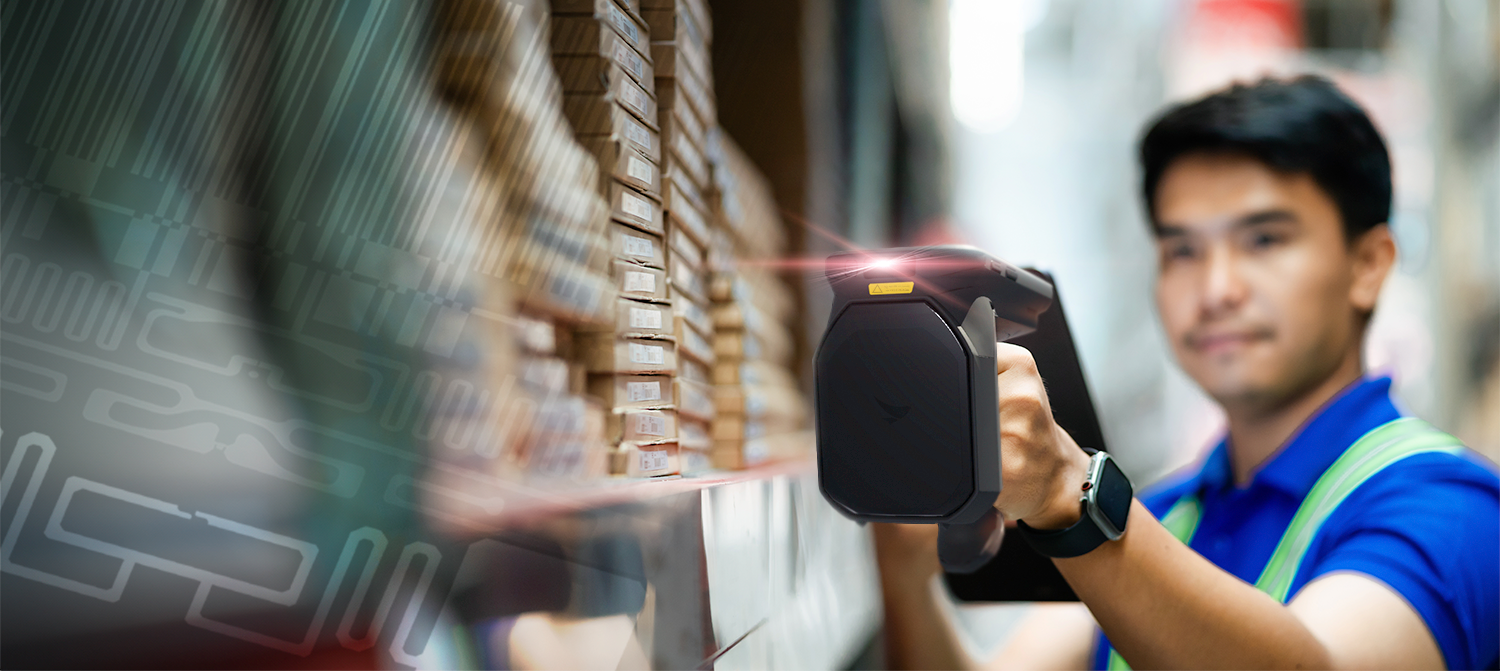
- Read Distance: Barcode scanners typically need to be within a few feet of the label. UHF RFID — the standard for retail and supply chain — can read tags at distances of 20 feet or more depending on environment and hardware. The Bluebird S10 RFID Handheld Reader, for example, delivers read ranges up to 42+ feet under optimal conditions.
- Throughput: Barcodes are scanned one at a time. RFID readers can capture hundreds of tags per second — enabling full pallet reads, cycle counts in seconds, and real-time receiving without item-by-item scanning.
- Cost: Barcode systems remain the lower-cost option, especially in high-volume applications. RFID solutions carry more upfront cost, but ROI is achievable quickly in environments where RFID delivers measurable efficiency gains — inventory accuracy, fewer errors, labor savings, shrinkage reduction.
- Durability: Barcodes can be damaged by moisture, abrasion, or smearing, rendering them unreadable. RFID inlays embedded in labels or hard tags are more resilient, and can survive harsh environments when properly spec'd.
The Sunrise 2027 Factor
| GS1 Sunrise 2027: By the end of 2027, all GS1-compliant retail point-of-sale systems must be capable of scanning 2D barcodes — including QR Codes and Data Matrix — in addition to traditional 1D UPC/EAN barcodes. This is not optional. Retailers who cannot scan 2D codes at checkout will face compliance gaps that affect vendors, suppliers, and store operations. |
GS1 Sunrise 2027 is reshaping how companies think about labeling. The initiative requires POS systems to read 2D barcodes, which can carry significantly more data than a traditional 1D barcode — including dynamic data such as batch/lot numbers, expiration dates, and serial numbers. This positions 2D barcodes as a bridge technology: richer than 1D, and increasingly interoperable with RFID in hybrid label formats.
For companies evaluating label strategy right now, Sunrise 2027 creates a clear inflection point:
- If you print 1D-only labels today, you need to assess your print hardware's ability to produce 2D symbologies (QR, Data Matrix).
- If you're deploying RFID, smart labels that carry both an RFID inlay and a 2D barcode offer the best of both worlds — full compliance and full visibility.
- If you're a supplier to major retailers, your labeling strategy directly affects your trading partner relationships.
TSC Auto ID RFID printers are capable of printing and encoding smart labels with 2D barcodes and RFID inlays simultaneously — giving operations a single print run that satisfies both Sunrise 2027 requirements and RFID-based inventory systems.
Which Is Right for Your Operation?
There's no universal answer — but there are clear patterns:
- Choose Barcode When: Your items are low-value, high-volume, and move through a stable, linear supply chain. Barcodes remain cost-effective, reliable, and universally supported. Upgrading to 2D barcode printing is often a straightforward hardware and label template change.
- Choose RFID When: You need item-level visibility, bulk reading, hands-free scanning, or real-time inventory accuracy. RFID excels in retail replenishment, warehouse receiving, asset tracking, healthcare, and any environment where manually scanning one item at a time creates a bottleneck.
- Choose Both When: Your supply chain includes partners at different stages of RFID adoption. Smart labels (RFID + barcode on a single label) allow manufacturers and distributors to leverage RFID efficiency while maintaining barcode compatibility for partners who haven't yet transitioned.
The TSC Auto ID & Bluebird Ecosystem: Hardware for Both
TSC Auto ID offers one of the most complete AIDC hardware ecosystems in the industry — spanning RFID label printers, barcode printers, RFID readers, mobile computers, and TSC Genuine Supplies-powered label media. Here's how the portfolio maps to your labeling and data-capture strategy:
RFID Printing: TSC RFID Label Printers
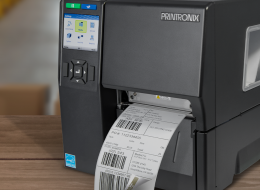
TSC RFID printers print and encode smart labels in a single pass — barcode on the face, RFID inlay encoded simultaneously. Purpose-built for retail, supply chain, and healthcare environments, TSC RFID printers support UHF Gen 2 encoding and are compatible with leading label management software including BarTender, NiceLabel and Codesoft, and third-party WMS platforms.
- Ideal for: Smart label production for Sunrise 2027 compliance + RFID inventory programs
- Works with: TSC Genuine Supplies RFID label media, optimized inlay configurations by application
Barcode Printing: TSC Desktop, Industrial & Mobile Printers
For operations that depend on high-volume barcode label output, TSC's desktop and industrial printer lines deliver speed, reliability, and 2D barcode support. Whether you're printing shipping labels, product labels, or compliance labels for GS1 Sunrise 2027, TSC printers handle 1D and 2D symbologies natively.
- Desktop series: Compact, high-speed, ideal for retail back-office and light industrial
- Industrial series: Built for demanding environments — high-duty-cycle, high-resolution output
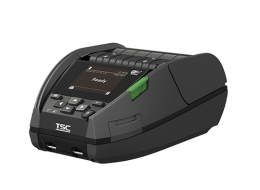
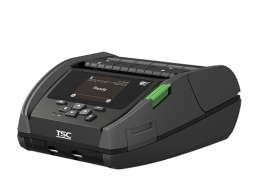
- Mobile series (Alpha-30L / Alpha-40L): Print on the floor, in the field, or at point of need
RFID Reading: Bluebird S10 RFID Handheld Reader
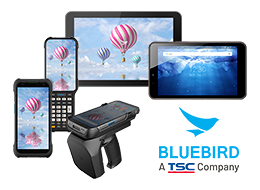
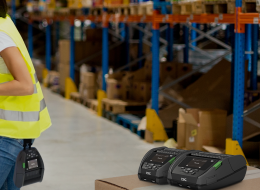
The Bluebird S10 RFID is a purpose-built RAIN RFID handheld reader designed for enterprise environments where accuracy, range, and durability are non-negotiable. Key specifications include:
- Read rate: Up to 1,300 tags per second for high-throughput inventory operations
- Read range: Up to 42+ feet under optimal conditions — reducing the need to move or individually scan items
- Drop resistance: Survives 5-foot drops to concrete — built for warehouse and retail floor environments
- RAIN RFID compliant: Adheres to GS1 Gen 2 / ISO 18000-63 standards-based RFID ecosystems
The S10 RFID is engineered to pair with TSC RFID smart label infrastructure — creating a complete read/write ecosystem from print to scan.
Barcode & RFID Scanning: Bluebird Enterprise Mobile Computers
Bluebird's enterprise mobile computer lineup supports both barcode scanning and RFID reading in ruggedized handheld form factors — giving warehouse associates, delivery drivers, and floor staff a single device for both data capture modalities. Android-based, enterprise-managed, and compatible with leading device management platforms including SOTI.
Supplies: TSC Genuine Supplies RFID & Barcode Label Media
The label is as important as the printer. TSC Genuine Supplies provides optimized RFID label media — matched inlay configurations, tested adhesives, and the right face stock for your application. Using off-spec media with RFID printers degrades encoding reliability and read range. TSC Genuine Supplies media is engineered to work with TSC RFID printers for consistent, certified output.
The Case for Smart Labels: Getting the Best of Both
RFID and barcodes are not mutually exclusive — and for most complex supply chains, they shouldn't be. A smart label encodes an RFID inlay and prints a barcode (1D or 2D) on a single label, produced in one print pass on a TSC RFID printer. This approach delivers:
- Supply chain compatibility: Trading partners without RFID scan the barcode; RFID-enabled operations read the inlay — no relabeling required
- Sunrise 2027 readiness: 2D barcodes on the face meet GS1 compliance requirements
- Backup data access: If the RFID chip is damaged, the barcode provides a fallback — similar to how a human readable UPC number backs up a damaged barcode
- Item-level traceability: RFID encodings contain item-level serial numbers by design. Some barcode systems are not designed to accommodate individual serial numbers.
Ready to Evaluate Your Labeling Strategy?
With Sunrise 2027 on the horizon, now is the time to assess your current barcode and RFID infrastructure. Whether you're upgrading barcode printers to support 2D symbologies, deploying your first RFID program, or building a hybrid smart label workflow — TSC Auto ID has the printers, readers, and media to support the full journey.
Questions about Sunrise 2027 compliance or building a smart label program? Contact our team.